
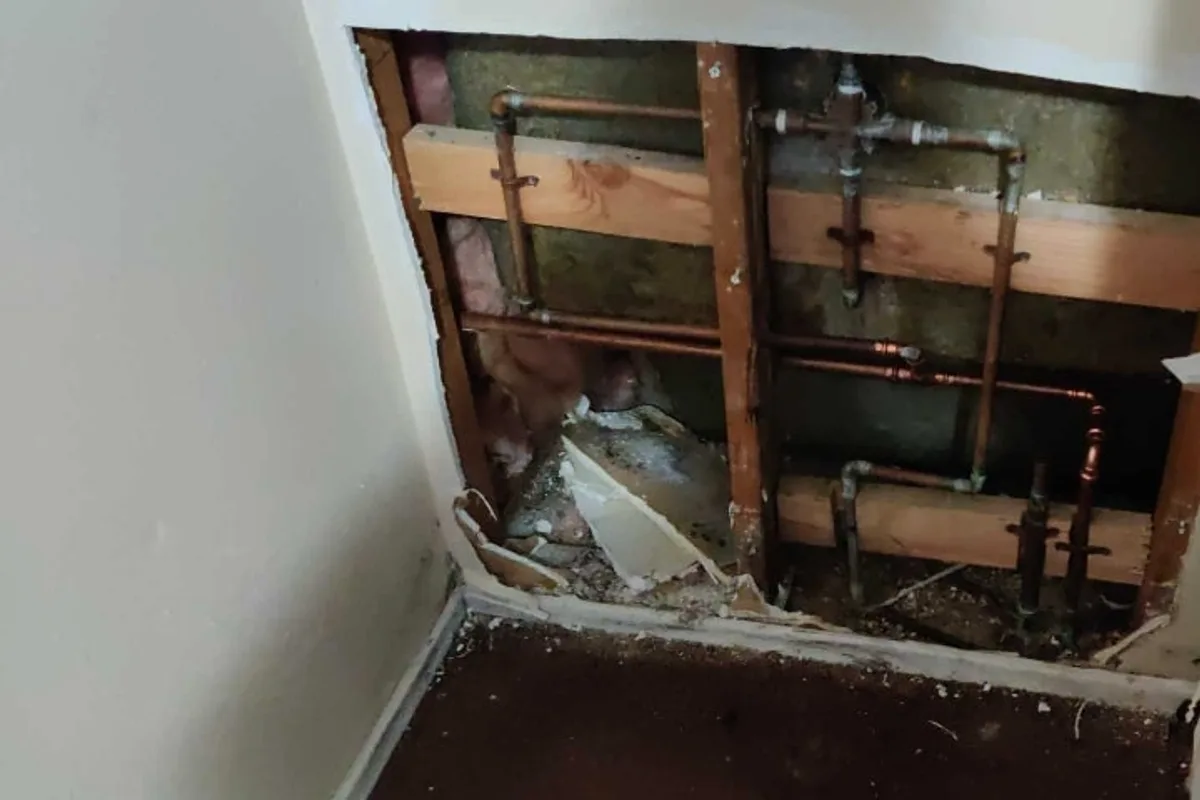
This gallery uses a smaller pipe-focused set rather than a full water damage restoration gallery. The purpose is to show leak source documentation, copper pipe access, repipe area checks, and moisture readings that help guide the plumbing plan.
More photos from this job
Additional plumbing photos show the access point, pipe condition, moisture checks, and repair planning details connected to this project.
Project summary
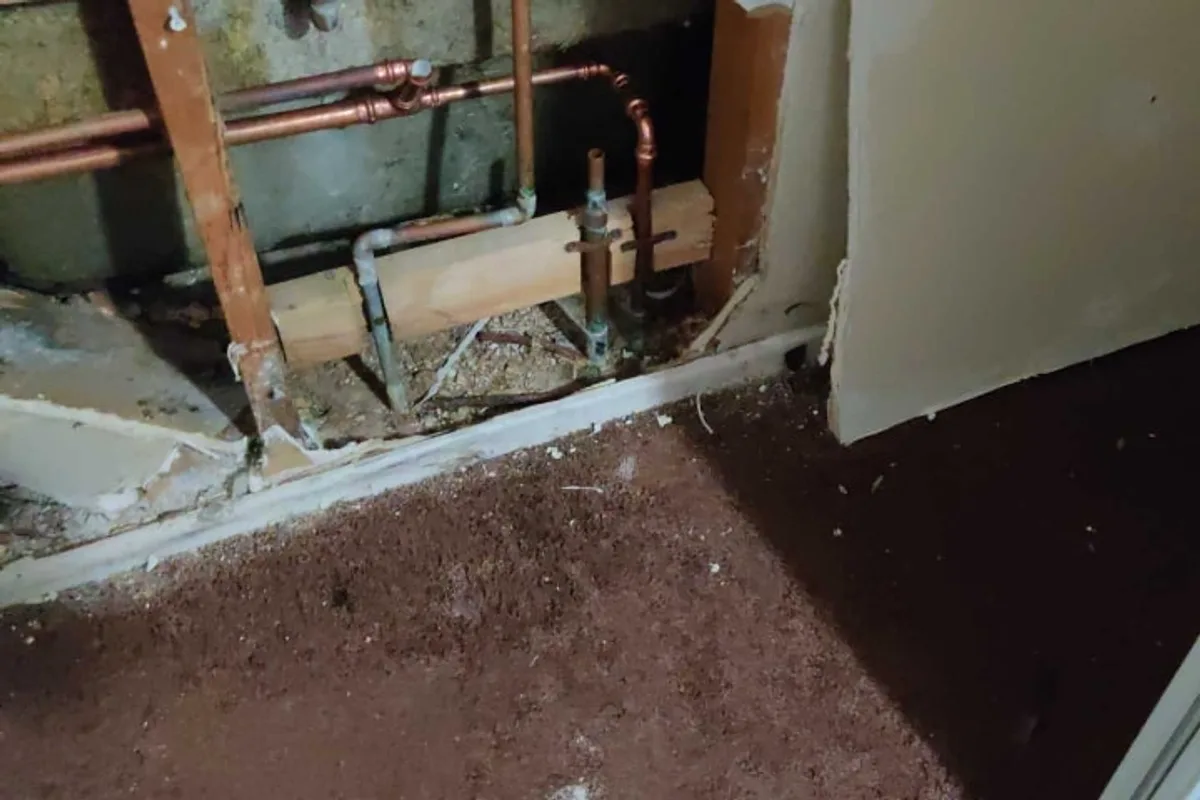
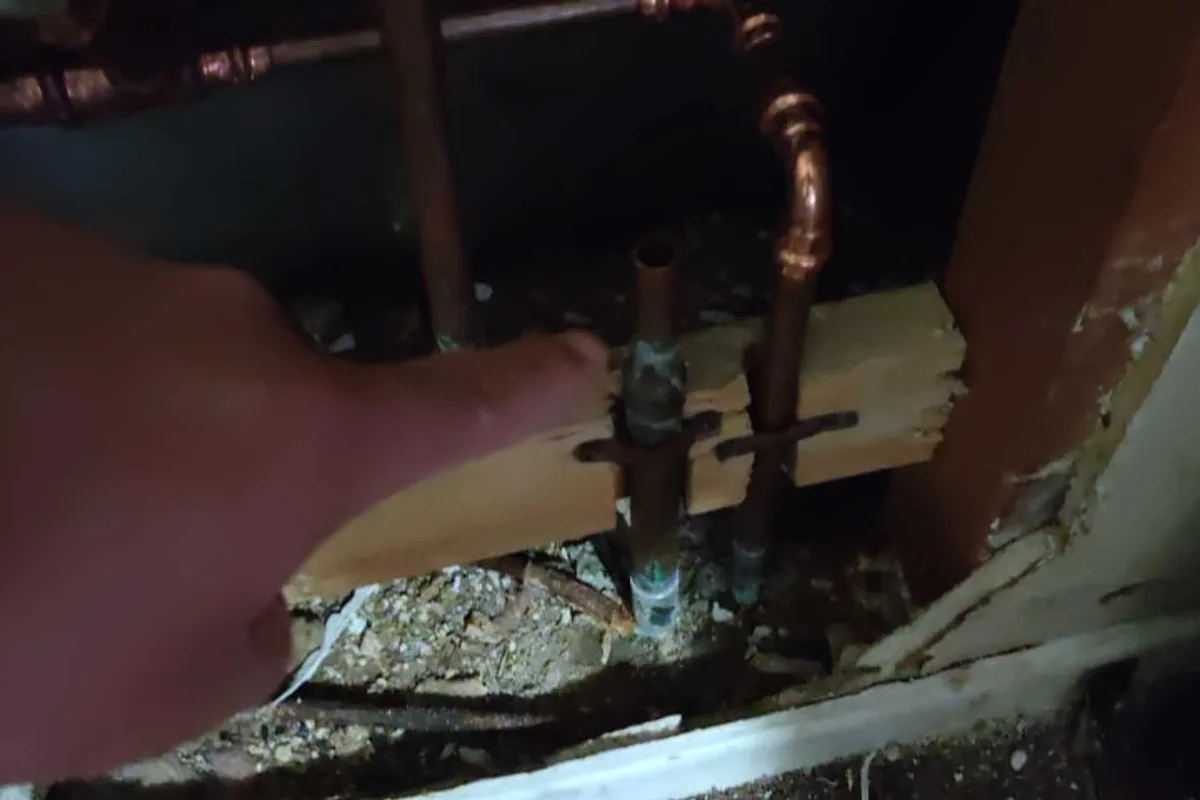
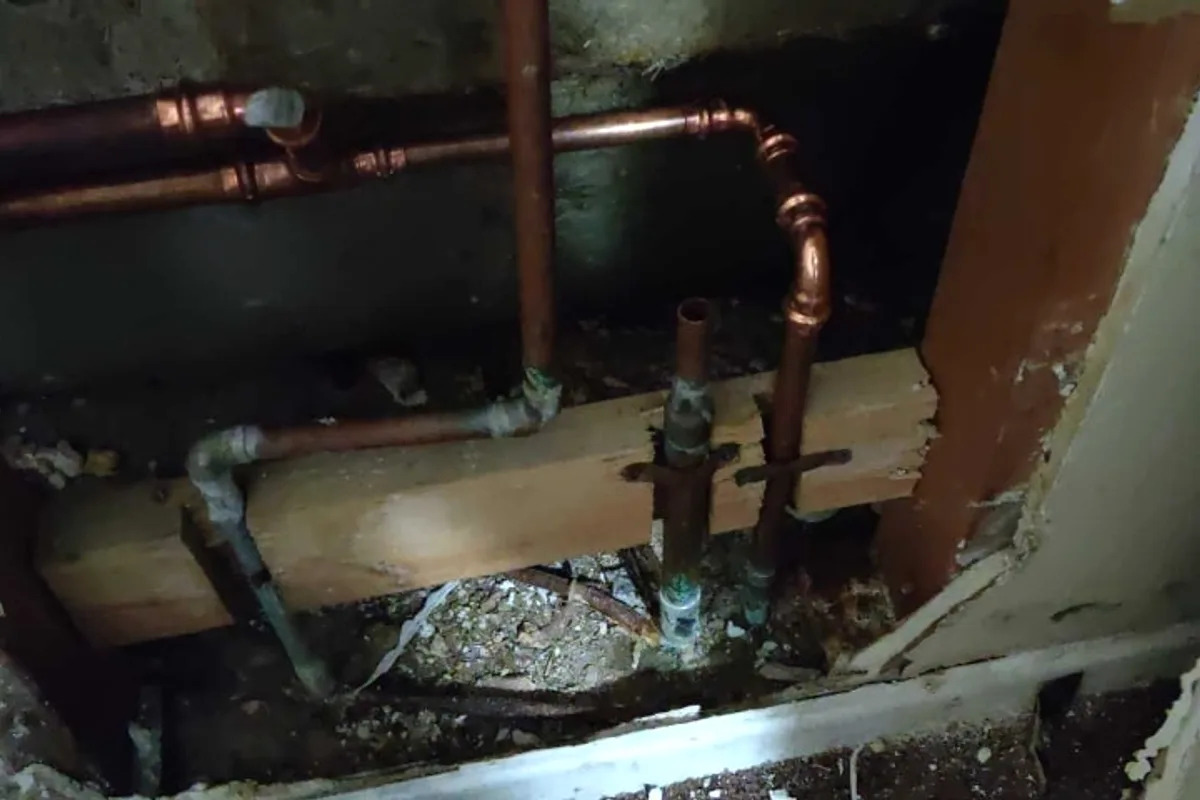
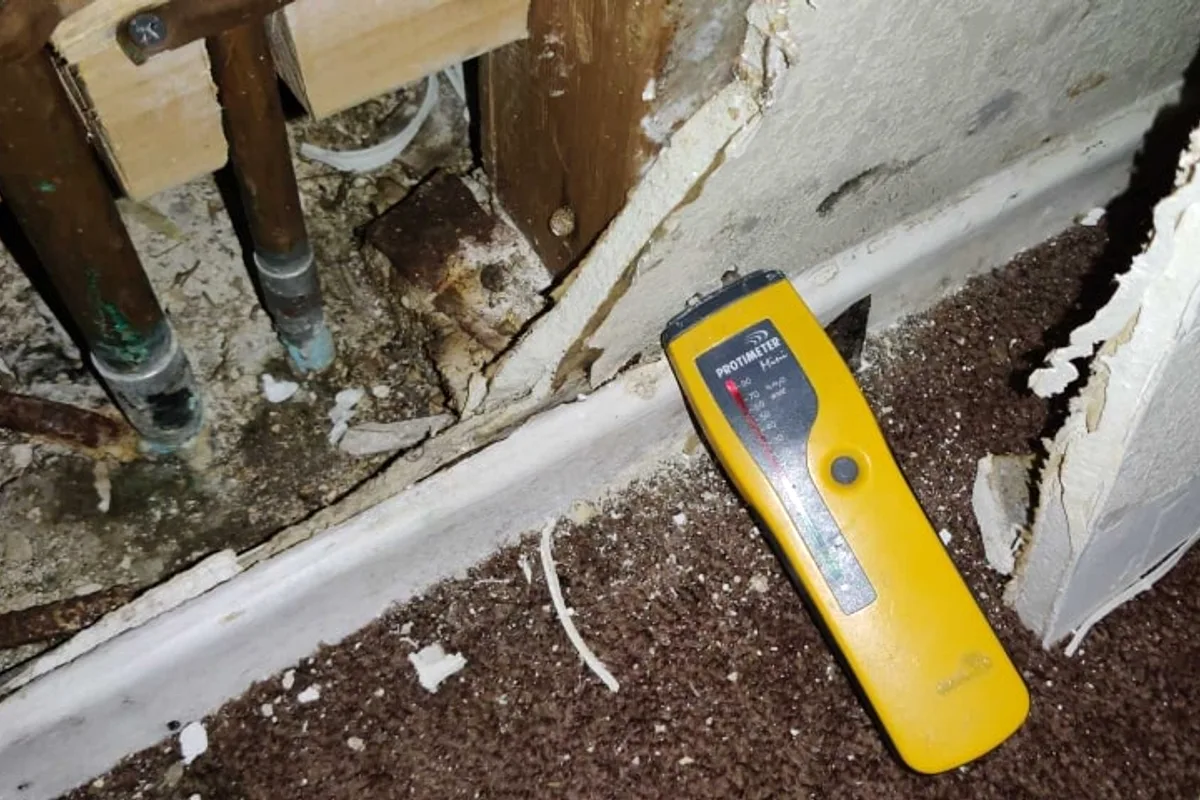
This Lake Elsinore project shows opened wall access, exposed copper piping, moisture readings, and pipe-area photos from a water line problem where the repair plan needed to be based on visible evidence instead of assumptions.
Project story
The homeowner symptoms came before the repair label
A repipe-related water leak rarely starts as a neat plumbing label. The first signs are usually wet baseboards, water under flooring, damp wall edges, a high water bill, pressure changes, or visible moisture near a pipe wall. In Lake Elsinore homes, those symptoms may appear before the failed section or repair route is obvious. A useful inspection starts by separating fixture-level issues from pipe-wall issues and by documenting what the home is actually showing.
The visible pipe access pointed toward repipe planning
This Lake Elsinore example shows a water loss tied to opened wall access, exposed copper piping, moisture checks, and pipe-source review. That distinction matters because slab leak detection, wall-line leak detection, copper pipe repair, PEX repipe planning, and rerouting can overlap, but they are not the same repair decision.
The opened wall created the proof needed for the next plumbing decision
Once wall access is opened, the next decision should be based on what is actually visible. The pipe route, copper line, fittings, nearby framing, wall cavity, and wet surfaces can all affect whether a direct repair, reroute, or larger repipe discussion makes sense.
Moisture checks kept the repair path tied to measured conditions
Moisture meter readings help show whether visible damage is limited to one area or whether water may have traveled into flooring, baseboards, drywall, or cabinet areas. Those readings matter before surfaces are closed because a wall or floor can look ready for cosmetic repair before the plumbing decision is actually complete.
The page stays focused on the plumbing side of the job
Homeowners can use this example to see why leak and pipe repair decisions should be tied to photos, readings, symptoms, and a clear explanation of the next repair choice. It is not a promise that every leak needs repiping.
What SoCal Slab & Repipe documented
- Lake Elsinore water leak detection documentation
- Opened wall pipe access and copper pipe photos
- Moisture meter readings near the pipe area
- Repipe and reroute planning support
- Repair planning based on the visible pipe area and moisture checks
- Related service options for leak detection, pipe repair, rerouting, and repiping